One app carried a real startup competition end to end: 28 ventures screened across 4 rooms and 7 rounds, then a grand finale where ~145 people voted live for who takes the stage.
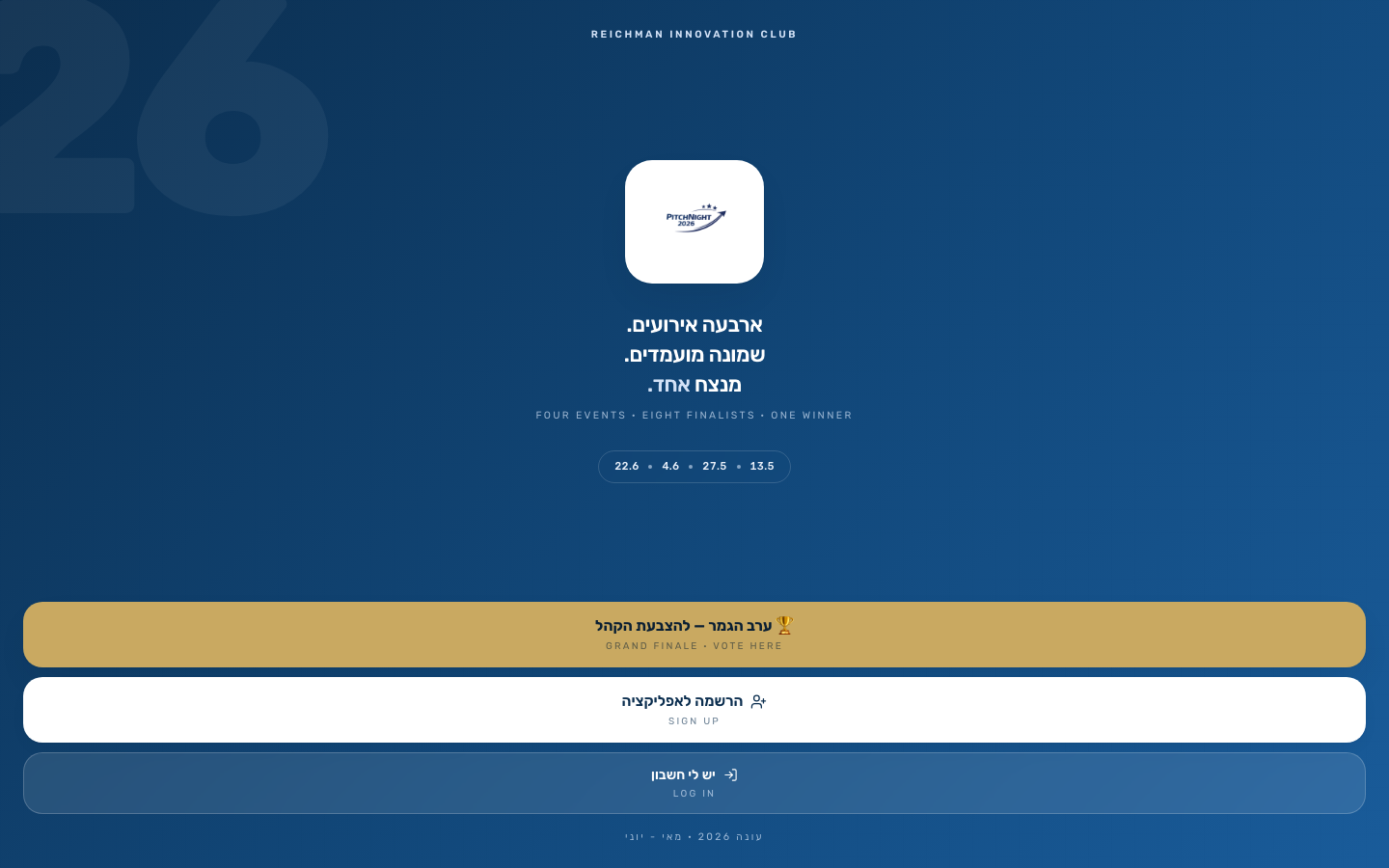
One app, four events
Bootcamp in May. Screening two weeks later. Mentoring in early June. The grand finale on June 22. Same app, four different jobs — and each event asked a question the previous one hadn't. This case study is the story of a product that had to grow up in public, on a schedule set by real audiences.
The live landing: four events, one app, vote at the grand finale
Screening — the app under load
28 ventures across 4 rooms, 7 rounds, 9 judges rotating. The heart was a judge × room × round matrix: when a judge ran late, ops selected two cells and one atomic operation swapped them — either both move or neither, re-rendered on every phone in under 200 milliseconds. And when the printed one-pagers didn't arrive on time, I shipped one-pager previews into the app mid-event. 75 judge scores landed in the database that night.
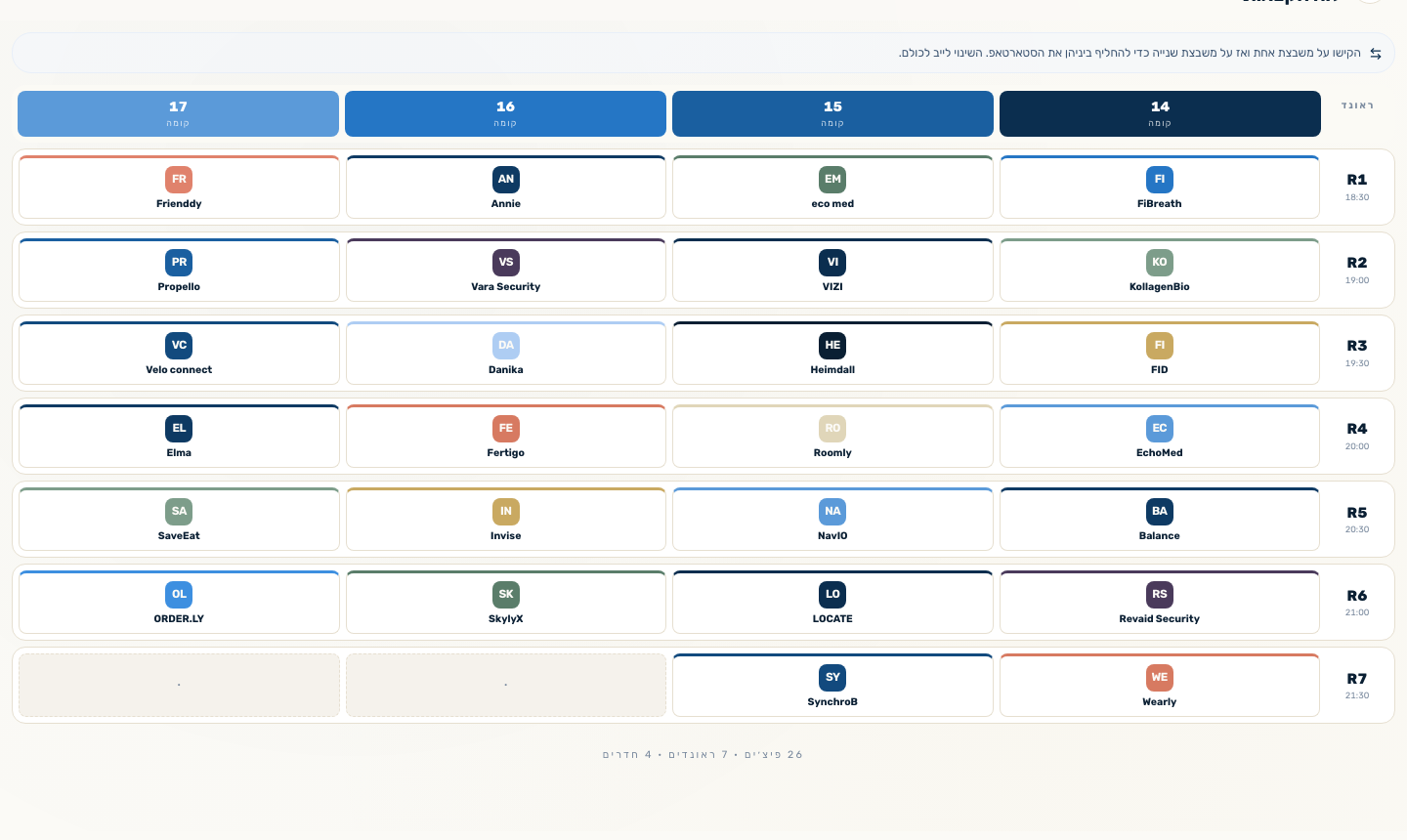
The real screening matrix: 26 pitches across 7 rounds and 4 rooms — tap two cells, one atomic swap
Between events, the app learned
Every event left the app a lesson. The leaderboard showed zeros after screening — so I refactored how scores are stored. Floor coordinators needed to act for a missing judge — so the app grew an impersonation flow. The team needed meeting summaries — so it grew CSV exports. By the finale, the product had shipped a feature for every scar.
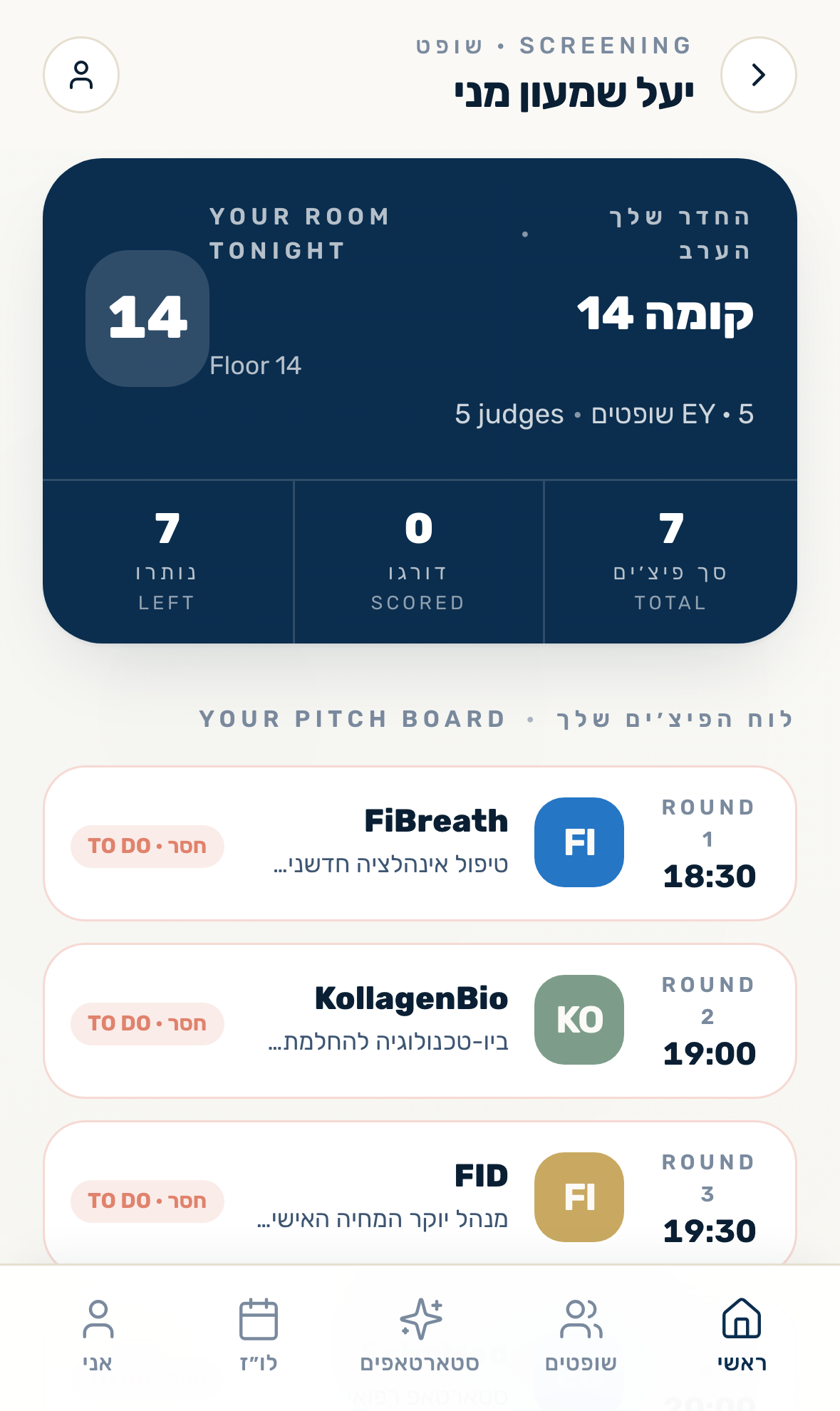
A judge's real night: their room, their pitch board, what's left to score
The finale — the audience decides
22 June 2026, Mindspace Hope Hall. Around 200 guests, 12 finalist startups at booths, 5 judges. Everyone scanned a QR, claimed their name from a list, and voted for their 5 favorites — roughly 145 live voters, on venue Wi-Fi, during cocktails. The 5 most-voted startups took the stage to pitch live; 3 walked away winners. A room that never saw the machinery underneath.
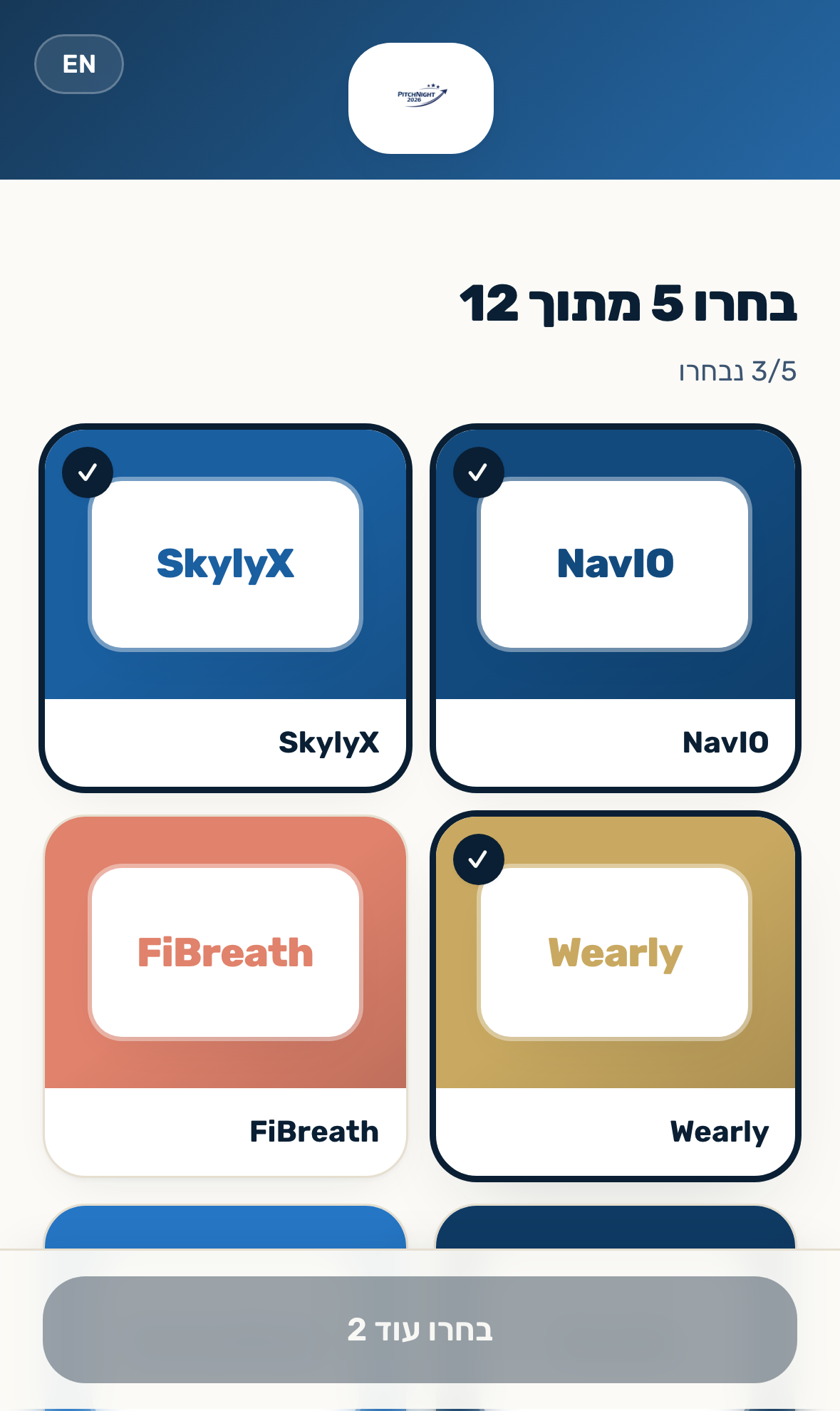
The finale ballot as ~145 guests saw it: pick 5 of 12, live during cocktails
The print kit
The physical layer was designed in code too: seven print pieces built as HTML and shipped to press — bilingual table flyers, judge name tents, twelve booth signs, wayfinding, stage timing signs, the entrance QR poster, and judge certificates. Same system that rendered the app rendered the paper.
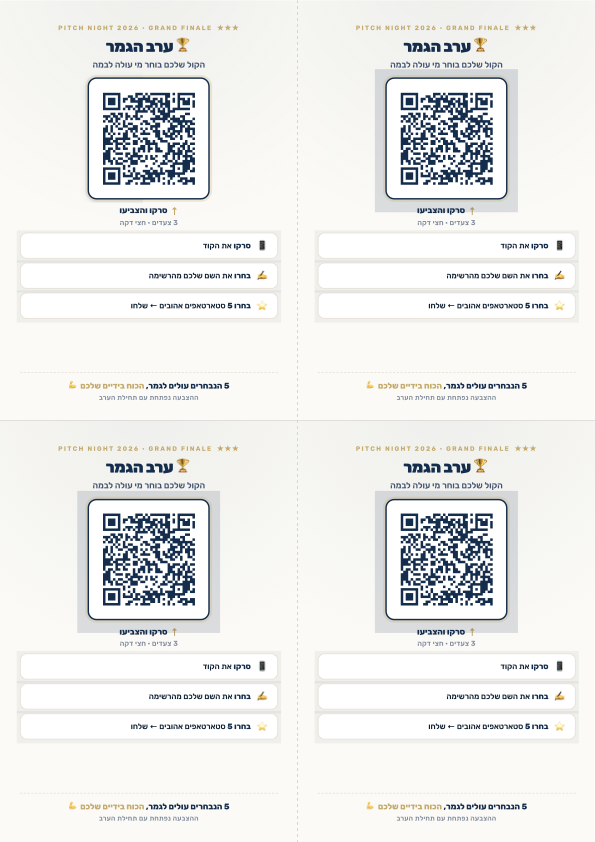
Bilingual table flyer from the finale print kit: scan the QR, claim your name, vote for 5 startups
What I did
Product, design, full-stack build — and the operation itself. I co-led logistics across all four events: venue visits, judges, catering, run-of-show, and the print production. A judge wrote in the group chat afterwards: "Huge thanks to Yam for the impressive app." The best compliment was quieter — nothing on the night asked for attention.
Decisions AI couldn't make
The audience picks who takes the stage
Letting ~145 live votes decide which 5 of the 12 finalists pitch live was an event-design bet, not a technical one. It turned guests from spectators into stakeholders — and put real pressure on the app to not fall over.
No accounts. Claim your name.
Sign-up on venue Wi-Fi during cocktails kills participation. Instead, you scan, tap your own name from the guest list, and vote. Ten seconds. The fraud surface was acceptable for one night; the participation rate wasn't negotiable.
When print failed, the app absorbed it
At screening, the printed one-pagers didn't arrive on time. Instead of apologizing, I shipped one-pager previews into the app mid-event. Deciding the app is the fallback for the physical world — that's a call a model can't make for you.
What I got wrong
I let judges score in absolute numbers across four rooms of very different strength. Comparing them afterwards needed a human reconciliation layer nobody had planned — and the leaderboard showed zeros until I refactored how scores were stored. Fixed both before the finale.
Built with Claude Code + React/Supabase; every product and event decision was mine.
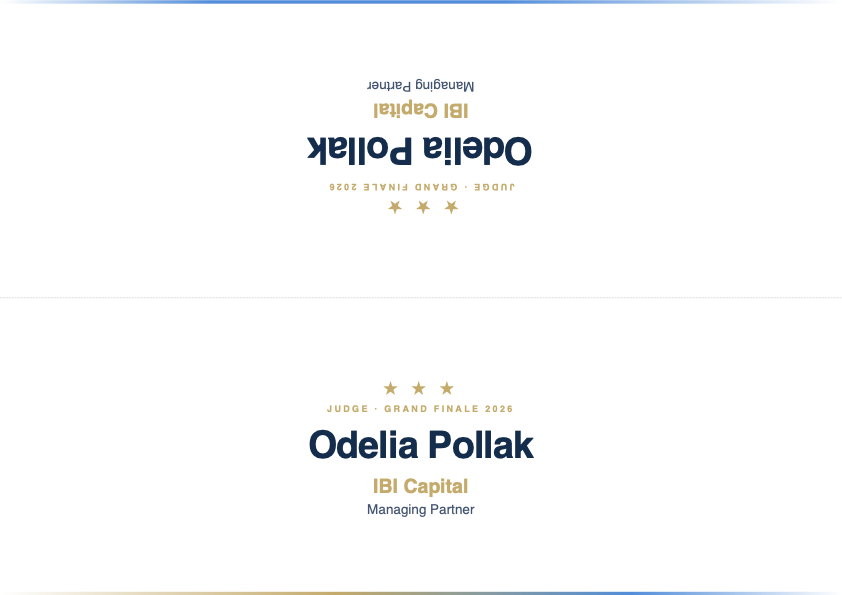
Judge name tents, designed in code and printed for the finale
Reichman Budget Automation
Photograph a receipt — the university gets the exact PDF it requires. Refunds went from weeks to days.