
A voice-first AI learning partner, live in private beta with university and high-school students. You explain your material out loud; Lumi asks the questions that expose what you don't actually know yet.
The app
Reading and highlighting feel like learning. They aren't. Explaining out loud is. TeachBack puts a patient listener on the other side: you upload material, talk it through in Hebrew or English, and Lumi answers with questions, not answers. Real-time voice, built around speaking rather than typing.

Lumi, TeachBack's AI persona
The website
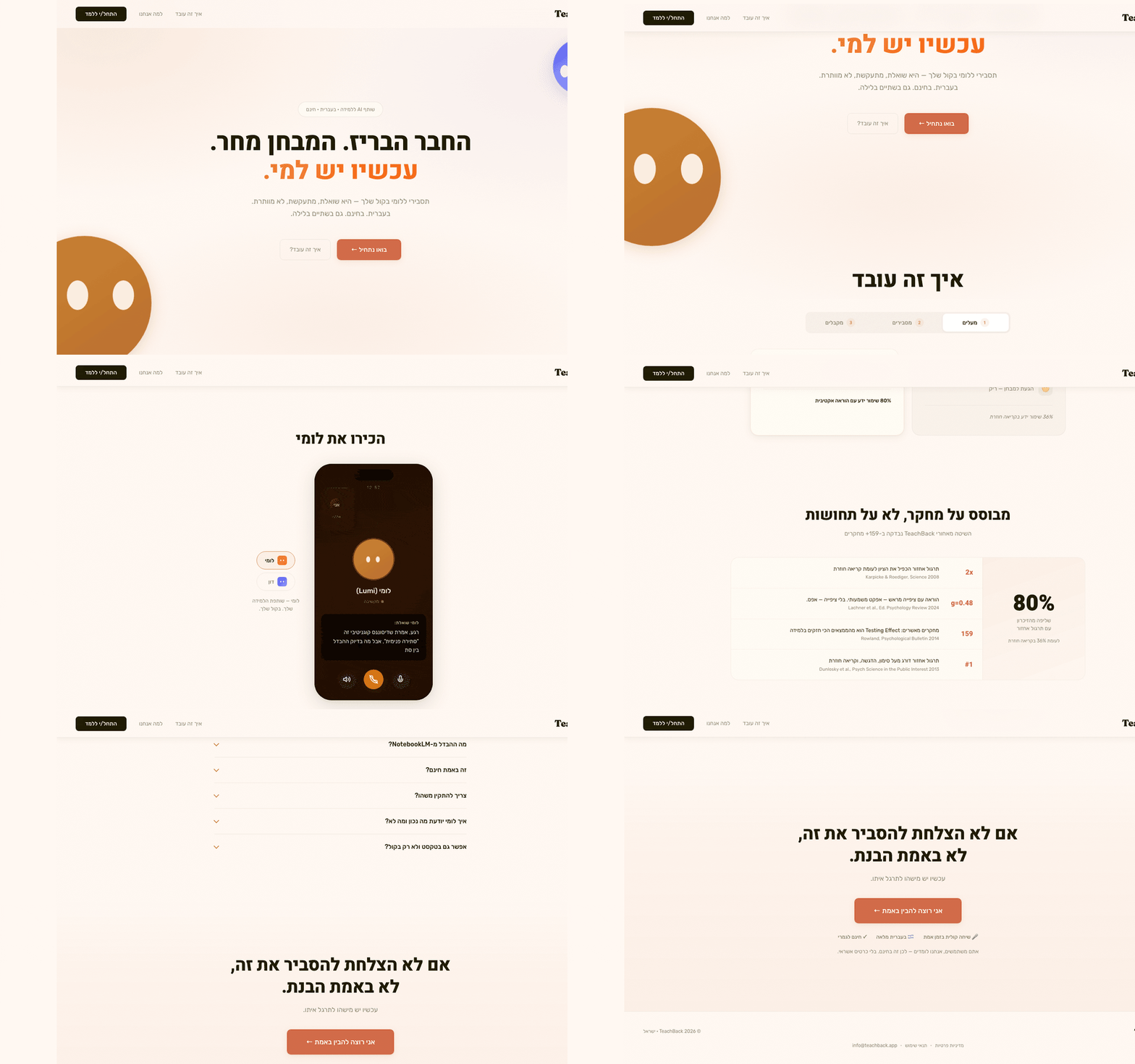
teachback.app is the front door: one promise, one demo, one button into the beta. Hebrew-first down to the typography — because a product whose moat is natural Hebrew can't have a landing page that sounds translated.
TeachBack: live landing page scroll
What I did
Everything a founding team does, alone: the product thesis, the persona design, the UI, the build, and the beta itself — recruiting university and high-school students, watching sessions, and shipping fixes between them. Next: subject-specific Lumis, teacher dashboards, and a way for parents to listen along.
Decisions AI couldn't make
Hebrew-first, as strategy
English has a hundred AI tutors; Hebrew has almost none that sound human. Choosing the smaller market as the moat — and holding the bar of 'Hebrew that doesn't sound translated' — is a founder call no model would make.
Voice-first over chat
A chat UI would have shipped in a week. But typing summaries isn't teaching — explaining out loud is. Betting the whole UX on realtime voice made everything harder and is the entire point of the product.
Lumi asks; she doesn't answer
The obvious AI product answers questions. TeachBack's persona is deliberately restrained: curious, patient, and never the one doing the explaining. Keeping that boundary against every instinct to 'be helpful' is what makes it a learning tool and not another chatbot.
What I got wrong
I built for university students first because they were closest to me. The strongest early signal came from high-school students — different attention span, different material, different parents in the loop — and parts of the product had to bend to fit them.
Built with Claude Code + Next.js/Supabase; every product decision was mine.
Pitch Night
One app ran a four-event startup competition — and 145 people voted live at the finale.